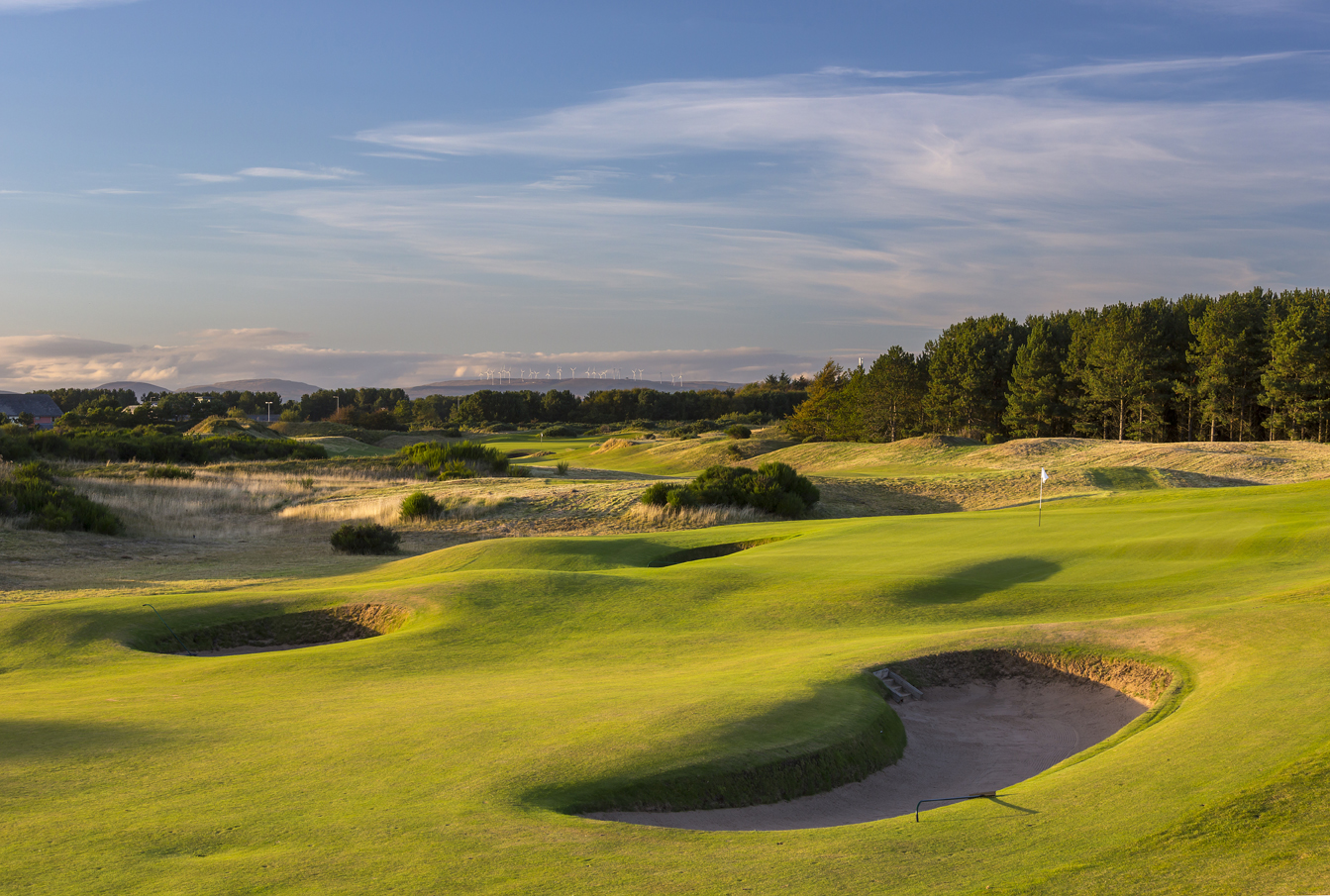
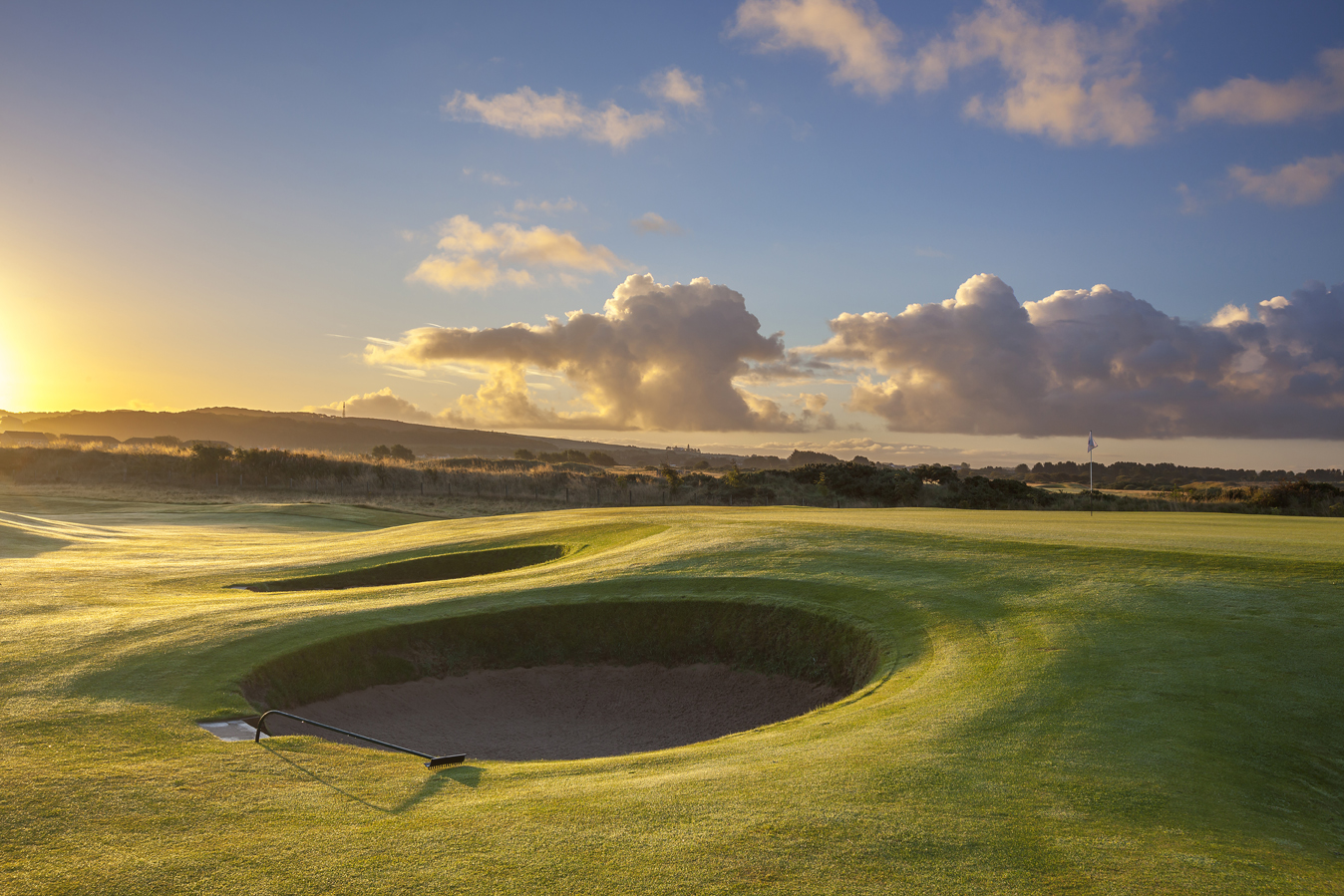
Showing posts with label golf. Show all posts

Thursday, 14 July 2016

Royal Troon's Postage Stamp

Here's my take on Royal Troon's awesome number eight - the daunting Postage Stamp.


According to the scorecard, the easiest hole at Royal Troon is the eighth. Slightly downhill and at only 123 yards, you wouldn’t argue with the stroke 18 rating. What the guide doesn’t tell you is this innocuous par three also happens to be one of the most devilish you will encounter and certainly one of the most feared in golf.

At least on paper, the Postage Stamp appears to be a cheery knock amid the fiery links of Royal Troon. But it ain’t. This seemingly harmless hole, the shortest on the Open Championship rota, is a card wrecker on a diminutive scale.

In 1997, Tiger Woods arrived at the 8th during the final round of the Open Championship biting at the heels of the leaders. At 21, he had recently become the youngest winner of the Masters and had been crowned the world’s No 1. Scotland’s west coast air was thick with anticipation.

When he eventually limped off the 8th green, Tiger’s fallibility had been exposed. He came unstuck when he pitched his tee shot into one of five green-side bunkers. Failing to escape from the deep trap on his first attempt, he scrambled an escape and then three-putted from 15 feet. His triple-bogey six was confirmation that despite its length, Royal Troon’s Postage Stamp could tame the fiercest competitors.

On the face of it, a round at Royal Troon builds towards this golfing L’Enfant terrible. Tackling the Postage Stamp is a feather in your cap and no matter how you play it; there will always be a tale to tell. The reality is, however, that despite the narrow, slither of green banked on one side by a steep dune and a fearful drop on the other, the 8th is by no means the teeth in Royal Troon’s bite. 

Visit http://www.markalexanderphotography.co.uk/Troon/ for more images and info.

Tuesday, 9 February 2016

Dundonald Interview - part two


Mark Alexander discusses the marketing potential and business applications of golf course photography.


Dundonald Links is recognised as a must-play links course. Professional golf photographer Mark Alexander reveals his approach to capturing the natural beauty of this stunning Kyle Philips design.

Once you’ve captured a series of photographs and processed them, how do you convert your artwork into a marketing tool?

Once I’ve delivered the high-resolution and thumbnail images to my client, it’s up to them to utilise the images the way they see fit. This is something I can advise them on, but this could mean looking at a new website, using the images for media inquiries, creating social media content or producing art to decorate the clubhouse.

It’s important to note that golf magazines always find it very difficult to find good photography. So, if you have decent photography, you’re one step ahead of the pack. Editors want something that sparkles and prompts a response from the viewer, and if you are able to give them that, they’re far more likely to use it, especially on a big spread. With this kind of photography, you’ll often find that suddenly your course has been put on a more prominent page. 

Likewise, tour operators and people who promote golf courses and destinations also struggle to find imagery that stands out from the crowd. So if you have a selection of professional images, they will be more inclined to proactively promote your club.


In addition, the images provide the potential to open communication channels to spread your messages. I often help my clients work through these opportunities, but from my side of the fence as a photographer, when I am creating the images, one of the key things is to capture a good variety of shots. To ensure that each photograph has a different atmosphere, I shoot with different lenses, at different angles and at different times of the day. For example, you can have highly architectural images which look at the movement of the land and the way the fairway changes, and you can also have images that look at the broader environment in which the course is set. So, by capturing a variety of shots, I ensure my clients have a selection of images that can be used to tell different stories.


When you are asked to provide a consultancy service, what is your first approach?

First, I like to sit down with the client and discuss their objectives; what they want to achieve, and by understanding their rational, we can work forward towards a clear goal. I like to explore different options like creating adverts, e-brochures, new websites or pamphlets. Whether the goal is to attract new visitors, get more coverage in magazines or go up in the top 100 lists, when I start to understand my client’s objectives, I can tailor the marketing strategy to suit their needs.


Stay tuned for an insider’s look at a day in the life of professional golf photographer.

Wednesday, 27 January 2016

Mark Alexander photographs Dundonald Links

This is the first instalment of an interview with professional golf photographer Mark Alexander regarding his most recent shoot at Dundonald Links.


The Kyle Philips-designed course at Dundonald in Ayrshire, Scotland opened in 2003 and is now recognised as a must-play links course. It has hosted a number of professional and amateur tournaments, notably pre-qualifying for the European Tour and the Senior British Open Championship, and most recently the Aberdeen Asset Management Ladies Scottish Open. In line with Kyle Philips’ design directive, professional golf photographer Mark Alexander reveals his approach to capturing the natural beauty of Dundonald links.


Kyle Philips’ ambition when designing Dundonald was to create a championship links that felt as though it was an old, established course. Having covered every square inch of the layout, do you believe he achieved his goal?

"Yes, absolutely. The first thing you appreciate is that the links have been worked so well into the landscape. Before it was very flat and nothing to write home about; but, what they’ve created is a very special landscape that genuinely has the look and feel of an established links. 

"It’s a beautiful, playable course. Everything is laid out in front of you so when you stand on the tee you can envisage how the course will play, which really heightens the excitement."


Kyle Philips also designed Dundonald with the philosophy that a golf course’s character and personality should be derived from the site. How do you capture that in a photo?

"I like to shoot from the golfer’s perspective so when they look at the image they can feel the club in their hands. To do this, I look at the playability of the course and the hole in terms of where I’d like my ball to land on the green or where I’d like it to land it on the fairway. But equally, I like to capture the broader view, which encompasses the dangers involved in terms of the bunkering, the dunes or the rough which adds colour and defines the hole.

"I try to incorporate both the fairway and the greenscapes as well as the rough and dunescapes. The two blend so well at Dundonald, it’s really quite spectacular."

Next week we’ll hear about the business side of Mark’s artistic trade. 

Wednesday, 28 October 2015

Link up with the European Institute of Golf Course Architects


Some exciting news from the European Institute of Golf Course Architects - great to be associated with this fine organisation. See EIGCA's press release below...


PHOTOGRAPHER MARK ALEXANDER BECOMES LATEST EIGCA CONSULTANT PARTNER

The European Institute of Golf Course Architects is delighted to announce that Mark Alexander has become a Consultant Partner.

Mark Alexander
Mark is an award-winning golf photographer whose work is used to bring marketing and advertising campaigns to life in leading golf and travel magazines.
Commissioned by golf clubs, resorts, tourism bodies and magazines, Mark’s photographs capture the beauty of some of the world’s best known golf courses. He is also an accomplished architectural, reportage and portrait photographer and has been commissioned by global organisations to shoot personalities and projects for worldwide audiences.
During the Scottish Open at Gullane an exclusive set of Mark’s photographs, capturing some of Scotland’s most admired golf courses, was exhibited at Gullane Art Gallery.
EIGCA Executive Officer, Julia Green, welcomed Mark as a Consultant Partner, saying: “I am so pleased that Mark has become the latest to join our growing list of Consultant Partners. Mark has had a close association with the EIGCA for a number of years and I am delighted that he has decided to formalise that relationship by becoming a Consultant Partner. We very much look forward to welcoming him officially at our Annual Meeting in April next year.”
Consultant Partners are given the opportunity to meet and interact with EIGCA members and the wider golfing industry at the EIGCA annual meeting and may attend continuing professional development events. They are also included in the Consultant Partner database on the EIGCA website. Only EIGCA partners are granted direct access to the membership.
For more information on the Consultant Partnership Programme please click here
For more information on Mark Alexander’s work, please go to www.markalexanderphotography.co.uk

Tuesday, 23 June 2015

Gallery first for golf photographer - press release


Check out the exciting news from Mark Alexander Photography...


Prestigious gallery FIRST for
Scottish golf PHOTOGRAPHER

Renowned Scottish golf course photographer Mark Alexander will become the first photographer to exhibit his work at one of Scotland’s most prestigious art galleries next month. The internationally acclaimed photographer will showcase a selection of his sought-after images at Gullane Art Gallery during July coinciding with the Aberdeen Asset Management Scottish Open taking place at Gullane Golf Club.

Alexander will present an exclusive set of 12 framed images capturing some of Scotland’s most admired golf courses including Muirfield, North Berwick and Gullane itself, all of which are part of Scotland’s Golf Coast. The exhibition will also consist of images from Alexander’s home town St Andrews and the famous Old Course which will host this year’s 144th Open Championship also in July.

Alexander, whose work appeared recently on the front cover of Great Golf and Golf World magazines following shoots in New Zealand and at Prestwick Golf Club, is delighted to present his work to the public. “I am often commissioned by golf clubs, resorts, tourism bodies and magazines to photograph courses, but seldom do I present my work to the general public. For me, this is an exciting opportunity to showcase my work on a large scale at a fantastic venue. It is also a tangible way of highlighting the beauty of some of Scotland’s most notable courses. I certainly hope the crowds flocking to Gullane this summer will enjoy it.”

The stunning high-resolution images range in size from 18”x12” to 34”x12” super panoramas. Each limited edition framed print has been signed by the photographer and is presented in a deep-bevel single mount within a wide wooden frame along with a certificate of authentication that includes information of how the image was captured, including specific details such as the time and date at which the shutter was released (the earliest image was taken at 5:08am and the latest at 9:10pm).

For Gullane Art Gallery, this is the first time any form of photography has featured in the prominent outlet. As Roy McGregor, gallery owner, points out, it was a unique opportunity worth exploring. “In many ways, this is a time of firsts – this is the first time we have exhibited photography of any kind and it is also the first time the Scottish Open has been held at Gullane. We felt this was an exceptional opportunity to showcase the work of one of the country’s leading image makers, especially one who has pulled together such a compelling collection of stunning images that have never been seen by the public before.”

He continued: “Quite apart from the obvious technical quality of the work, I have been particularly struck by the artistic approach of the composition and tone; these are more than photographs, they are works of art. We have already received notes of interest about his work. This will be a must-visit for any golf fan or lovers of beautiful landscapes.”

Alexander, who is based in Fife but travels the world photographing golf courses, continues to be in high demand. Last year he became the first commissioned photographer to capture the historic course at Prestwick and has produced a set of three consecutive sell-out calendars for the St Andrews Links Trust culminating in the 2015 special Open Championship edition. This year he is photographing a selection of golf courses for hotel giant Marriott.

Alexander’s golf photography exhibition in the Red Jug Room at Gullane Art Gallery will consist of 12 large, limited-edition framed prints which will also be available unframed. Gullane Art Gallery will host an Open Day on Saturday 4th July which will officially launch Alexander’s work during the month-long exhibition.

- ends -


Note to editors

1) Mark Alexander is an award-winning golf course photographer and established journalist. He is a member of IAGTO and IGTWA.
2) His images have appeared in magazines such as Golf Digest, Links Magazine, Golf World, Today’s Golfer, Golf Monthly, Golf Course Architecture and Golf Illustrated.

3) Alexander is based in Fife but travels the world shooting golf courses for resorts, architects and golf clubs. He has over 125 courses showcased on his website – www.markalexanderphotography.co.uk
4) He has been commissioned by several entities including St Andrews Links Trust, Turnberry, Prestwick, La Manga, Finca Cortesin, Royal Lytham & St Annes, Northern Ireland Tourism Board, VisitScotland, Glenmorangie and Ralph Lauren.
5) In 2009, Alexander picked up Creativefife’s Best Commercial Photograph award for a portfolio of images depicting Turnberry’s Ailsa course.
  6) The attached image is of hole 17 on Gullane No.1
7) For more information about Mark Alexander, visit www.markalexanderphotography.co.uk.
8) For more information on Gullane Art Gallery, visit www.gullaneartgallery.co.uk


For further quotes, interview opportunities and images, contact yvonne@thewordassociation.biz or call Yvonne Alexander on:

Office:            +44 (0) 1337 858 807
Out of hours:  +44 (0) 7976 369 260

TWA    

Press release distributed by The Word Association
www.thewordassociation.biz


Monday, 27 April 2015

Kiwi Call II - Paraparaumu Beach Golf Club


Here's the second installment of my New Zealand adventure. Enjoy.

Missing links
[Next up] I visited Paraparaumu Beach Golf Club which is a 45-minute drive north of Wellington; New Zealand’s capital, and a world away from the extravagance of The Hills.

Here there is tradition, sandy soils and rippled fairways. With the Kapiti Coast providing sea breezes, Paraparaumu is a true links test defined by pot bunkers and uneven stances. Designed in 1949 by Alex Russell, onetime partner of Dr Alister MacKenzie, this is golf in its purest form seasoned by salty air and sandy lies. So authentic was it I had to remind myself that I was in New Zealand and not Scotland.


“I loved it instantly,” noted former New Zealand Open champion Peter Thomson. “We have nothing like it in Australia.” While the five times Open Championship winner clearly has a soft spot for this links layout, it turns out it is also a bit of a one-off in New Zealand as well.

“We don’t have a lot of classic links,” says general manager Leo Barber, “and links golf is a particular taste, so not everyone gets it. International visitors from the UK and Europe love it, while some Americans don’t.”


Debates around the merits of links golf reverberate around clubhouses the world over. In my opinion, Paraparaumu is a little slice of links heaven going for a song at NZ$150. For all the right reasons, it encourages you to play the ball on the ground to use the contours to get the ball close, especially when it’s windy.


“The wind is a big part of Paraparaumu,” says Barber. “It’s something we embrace, along with firm surfaces and brown grass. We let the course change with the seasons – it’s not springtime all year round. In the middle of summer it will bake and go golden, and in the winter it will turn green and play a little softer. That’s golf; it changes with the seasons.”


Wednesday, 8 April 2015

Kiwi Call - The Hills


A trip to New Zealand provided me with an opportunity to photograph some wonderful golf courses. Here's the first of four blogs about the trip which are based on excerpts from an article I wrote for Great Golf magazine. Enjoy.

Over the Hills

New Zealand is the most beautiful place you are ever likely to visit - bar none. It was worth the debilitating jet lag and lingering fatigue (which strikes with vengeance on the return leg) to witness this stunning country. Indeed the decision to strike it off my Bucket List was justified as soon as I stepped off the plane at Auckland on the North Island. By the time I reached Queenstown on the South Island, my satisfied smile had grown into a broad Cheshire Cat grin.


I was here to photograph the ultra-exclusive venue of the 2015 New Zealand Open – The Hills, and the juxtaposition of a championship course surrounded by a glacial valley with jaw-dropping views filled me with joy and excitement.

To be honest, I knew little about the layout before I arrived, and would have known even less if I hadn’t spotted the cheque-book sized name plate on the wooden gate modestly confirming this as the official point of entry. Once inside, the meandering road towards the clubhouse gave little away and it wasn’t until I stood on the first tee that I properly saw what this course was all about.


What lay in front of me was a deeply undulating fairway leading up to a plateau green with an enormous mountain range providing a stunning backdrop. This was golf on a grand scale, and if that’s the kind of thing that gets your golf juices flowing then The Hills could cause a flood. This is epic golf where bare rock faces bank against smooth greens and long, flowing grasses define meticulously cut fairways. Add in the occasional sculpture framed by the dramatic landscape and you have a very special place indeed.

“He has very high expectations and an incredible eye for detail,” explains Craig Palmer describing the club’s owner Sir Michael Hill who heads up one of the world’s leading jewellery brands. “He wants this to be as good as there is.”


The director of golf has been at The Hills for six years and now manages a club that employs 25 greenkeepers and has attracted 200 member families. He says he still accepts some non-member bookings, but admits the goal is to become purely private at some point. My advice is to get in while you still can.


For more images of The Hills, visit http://www.markalexanderphotography.co.uk/TheHills/

Friday, 3 April 2015

John Imlay

I was lucky to meet John Imlay. It was a special day two years ago in North Berwick just the two of us chatting. He sadly passed away last week and I thought it would be appropriate to post an excerpt from the article I wrote about him in Golf Illustrated. He said it sounded like his mother had written it. With the respect I held for him, I took this as a compliment. He will be missed.


Building Bridges


John Imlay is on a mission. As well as championing the Bobby Jones name, he is also passionate about building bridges over some of Scotland’s great links courses.
(AN EXCERPT)

Like all great men, Imlay has an eye on enjoying his retirement especially as he has recently recovered from two knee replacement operations and is looking forward to walking between shots towards the end of the year. His other focus is securing his legacy, and, perhaps as importantly, that of another legend.

During the 1970s, a former law partner of Bobby Jones FM ‘Buster’ Bird devised a plan to honour his business partner and asked Imlay to help develop the idea. “He said Bob would never want a statue or anything that would glorify him, so instead Buster wanted to create a scholarship between St Andrews University and Emory University in Atlanta where Bob got his law degree. He wanted me to promote it but didn’t want all the usual clowns and balloons - he wanted dignity.”

That was the beginning of the Robert T Jones Memorial Trust Scholarship which was established five years after the great man’s death in 1971. It now supports four students from each university on an annual reciprocal placement in order to “perpetuate his memory in the hearts and minds of young people by creating a permanent memorial to his sense of values and character”. Golf skills, or knowledge, are not part of the criteria.

Before Buster died, he told his business partner Jean Branch and Imlay that the Jones flame would dim with his passing and he wanted Branch, and then Imlay, to keep the flame alive. That responsibility has now passed to Imlay who is stoking the fire through the scholarship and other initiatives including the non-profit-making organisation Friends of Bobby Jones. His latest endeavour is to create an annual celebratory dinner to commemorate Jones’ birthday on March 17 and launch the new golfing season.

Despite his custodial role, Imlay only met Jones once but it was a meeting that would have a profound affect on the young salesman. During a courtroom hearing involving a corporate dispute, Imlay reacted rashly to provocation from an opposing lawyer. “He ran in saying I was a no-good, lazy salesman slob so I took a swing at him – I was a bit of a hothead back then and this was Southern justice,” says Imlay.

The judge called a three-hour recess to calm things down and Imlay’s lawyer, a certain Jean Branch, took his client to see his senior partner – Bobby T Jones. “He was all knarled up and didn’t weigh any more than 110 pounds, but he still had his mind,” Imlay recalls. “He said until he was 19, his temper always won. Until he was able to control his temper he never had a victory in a major tournament, but once he controlled it, he started to win.”

The 30-minute conversation changed Imlay’s life. “’John, I want you to go in there and nice them to death’,” he says describing the advice he received from the Dixie Whizkid. “I always remembered that quote - it changed my life. I went into the courtroom and niced them to death and won the case. It worked, and I have used it ever since.”

It was a seminal moment and one that would define Imlay’s approach to life and business. It served him well. He amassed a considerable fortune built up on a reputation for astute marketing and his down-to-earth approach. More importantly, he has come out the other end with the distinction of being universally liked and respected. From former captains at Muirfield to the caddies of North Berwick, Imlay has the ability to put people at ease.


With guidance from some of golf’s great names, it seems Imlay was destined to build bridges wherever he went.

Thursday, 26 March 2015

New Zealand photography

Towards the end of last year, I completed four commissioned shoots in New Zealand. It was an incredible trip to a fantastic country. Here's the story...


26 March 2015

Scottish photographer
TEES IT UP DOWN UNDER

The recently formed Golf Tourism New Zealand (GTNZ) group has announced the completion of an exciting photography project that has incorporated some of the country’s best golf offerings including the host of this year’s New Zealand Open. Award-winning golf photographer Mark Alexander was commissioned by members of the group to shoot some of New Zealand’s top golf courses including The Hills.

The assignment saw the Scottish photographer take in some of the finest tracks on both the North and South islands including New Zealand’s most established layouts. Shooting in December, Alexander visited four clubs including The Hills Golf Club outside of Queenstown; host to this year’s New Zealand Open, and Paraparaumu Beach Golf Club which is widely regarded as one of the best links courses in the southern hemisphere. The stunning inland courses of Wairakei and Manawatu were also captured by the photographer who is based at the Home of Golf.

Ryan Brandeburg, executive director of GTNZ, was delighted Alexander could make the trip: “Part of our new golf initiative is to improve print and digital media,” he said. “The chance to offer the services of an internationally renowned photographer like Mark was a great opportunity. When we spoke to the golf courses, everyone saw the benefit of engaging Mark. With our location in the South Pacific, the frequency of a visiting golf photographer of Mark’s caliber is rare.”

He continued: “Golf courses are living, breathing assets that constantly change. We jumped at the chance to utilise Mark’s skills to capture some of New Zealand’s best golf courses in the peak of our summer.”

The commissioned shoots produced an extensive portfolio of landscape, portrait and panoramic images. Leo Barber, general manager of Paraparaumu Beach Golf Club, said he was thrilled with the results. “Mark has built up a reputation as one of the world’s leading golf course photographers and his work with links courses in particular impressed us, so we were delighted to have the opportunity to host Mark and have his lens bring our course alive with some superb photography.”

The resulting images will be used by participating clubs to boost their marketing and promotional efforts both within New Zealand and internationally. Between 2008 and 2012, no fewer than 280,000 golf tourists visited New Zealand, but as Alexander noted, New Zealand isn’t a regular stop-off for travelling golfers – yet.

“Photographing these beautiful golf courses was a great privilege,” he said. “I had never been to New Zealand before but the landscape, scenery and fantastic courses made for a memorable trip. It was extremely busy, but I fell in love with the place. Like Scotland, there is something for everyone and I am thrilled the courses that took part in the project are pleased with the final results. I hope my images attract golfers to play these internationally recognised courses as well as experience the best golf New Zealand has to offer.”

Manawatu Golf Club, New Zealand’s oldest golf course, also commissioned Alexander. “When we looked through Mark’s previous work, we were really excited about having him photograph our course,” said Michael Williams, Manawatu’s general manager. “The photographs we have received didn’t disappoint and will be really helpful when we refresh our website and promote our club as a place to play for visitors.”

Wairakei Golf & Sanctuary, located close to Lake Taupo, is also benefitting from Alexander’s photography. David Park, operations manager at the unique golf venue, says Alexander has produced a set of images that capture the essence of Wairakei. “We are extremely happy with the images Mark has supplied. He has taken shots from different angles and with different lighting from other photographers that we have used before. We found Mark easy to work with and very professional in everything he did for us.”

Alexander, who is based in Fife but travels the world photographing golf courses, continues to be in high demand. Last year he became the first commissioned photographer to photograph Prestwick in its 162-year history and produced a set of three consecutive sell-out calendars for the St Andrews Links Trust, culminating in the 2015 special Open Championship edition. He is planning a return visit to New Zealand to carry out more work.

To view Alexander’s work, visit www.markalexanderphotography.co.uk

- ends -


Note to editors

1) Mark Alexander is an award-winning golf course photographer and established journalist. His work has appeared in consumer magazines, newspapers and b2b titles.
2) His images have appeared in magazines such as Golf Digest, Links Magazine, Golf World, Today’s Golfer, Golf Monthly, Golf Course Architecture and Golf Illustrated.
3) Alexander is based in Fife but travels across the world shooting golf courses for resorts, architects and golf clubs. He has over 125 courses showcased on his website – www.markalexanderphotography.co.uk
4) He has been commissioned by several entities including St Andrews Links Trust, Turnberry, Prestwick, La Manga, Finca Cortesin, Royal Lytham & St Annes, Northern Ireland Tourism Board, VisitScotland, Glenmorangie and Ralph Lauren.
5) In 2009, Alexander picked up Creativefife’s Best Commercial Photograph award for a portfolio of images depicting Turnberry’s Ailsa course.
6) For more information about Mark Alexander, visit www.markalexanderphotography.co.uk.
7) The attached images are (from left to right);


For further quotes, interview opportunities and images, contact yvonne@thewordassociation.biz or call Yvonne Alexander on:

Office:            +44 (0) 1337 858807
Out of hours: +44 (0) 7976 369 260

TWA    

Press release distributed by The Word Association
www.thewordassociation.biz


Wednesday, 24 September 2014

Press release: Picture perfect Prestwick

I recently shot the beautiful Prestwick Golf Club. Here's all the details...


15th September 2014

Legendary club puts
itself in the frame
For the first time in its 163-year history, Prestwick Golf Club has commissioned a professional photographer to capture the spirit of the historic links. The renowned club took the unprecedented step during the 143rd Open Championship in July, when award-winning photographer Mark Alexander completed a detailed shoot of the course and club.

This is the first time we have specifically commissioned photography for the club, explained Ken Goodwin, Secretary of Prestwick Golf Club, the birthplace of the Open Championship. “Over the years, many photographers have visited the club, but this is the first time we have proactively brought in a photographer. Websites are the first port of call for people wanting to visit golf clubs, so as the technology has evolved so has our need for better imagery to promote our club.

The comprehensive shoot, which incorporated course photography, internal imagery, action shots and pictures of official replicas of the famous Claret Jug and Championship Belt, took place over two six-hour sessions spanning two days. “It was a great privilege and wonderful experience to photograph Prestwick,” said Alexander. “The place is bathed in history and yet the course is still relevant, quirky and exciting. That’s what I wanted to capture in the images – the unique nature of this very special place.”

He continued: “To be the first commissioned photographer to shoot the course and clubhouse was particularly important considering the history and everything that has taken place here. It is one of golf’s greatest treasures, and creating imagery for it has been inspiring.”

With the last images being taken at 9:30pm and the first being shot at 5:30am the following morning, Alexander was able to shoot the famous course from a number of angles using the scintillating west coast light. The resulting portfolio of high-resolution photography will form a cornerstone of the clubs future marketing materials and promotional activities. Our existing images were rather flat, Goodwin explained. They had served a purpose but it was time for something new; something more vibrant.

He continued: The Committee has been particularly delighted with the images because they are now in a position to compare the before and the after. Before, when we were asked by magazines for images, what we had simply wasnt up to scratch. We really needed images that would reflect the history, the welcome at the club and the golf course, and thats what we got by working with Mark.

As well as using the Claret Jug as a prop, Alexander also drafted in the club’s Head PGA professional David Fleming and his senior assistant Nicky Sinclair, who posed for the camera during the shoot. Marks photography of Prestwick captures the unique style of our classic old Tom Morris seaside links, perfectly highlighting the contrast between tall fescue grasses and tight undulating fairways, said Fleming.

The classic links at Prestwick hosted the first 12 Open Championships and then jointly held the tournament with The Royal and Ancient Golf Club of St Andrews and The Honourable Company of Edinburgh Golfers. As a result, only the Old Course in St Andrews has hosted more Open Championships than Prestwick.

Not surprisingly, the club and its famous links have amassed a number of admirers over the years including four-times Major winner Ernie Els who described Prestwick as one of the best golf experiences in the world. Now, with a new set of images with which to promote itself, the club is hoping to attract a new band of followers.

The images go far beyond just pictures of the golf course,said Goodwin. We now have internal shots that give visitors a feel for what Prestwick is about. Its not just about the golf course; its about understanding the history and the welcome. We really needed images that reflect that, and thats what we got.

- ends -


Note to editors

1) Prestwick Golf Club was founded in 1851 by a group of 57 members. It is situated half an hour
s drive south west of Glasgow on Ayrshires famous golfing coast.

2) The first Open Championship was held at Prestwick in 1860. The winner was Willie Park from Musselburgh who led Tom Morris, the Keeper of Prestwick
s greens, by two shots.

3) A stone cairn to the west of Prestwick
s clubhouse, marks the first tee of the original 12-hole course on which the first Open was played. Six of the original greens are still played on today.

4) Prestwick hosted the first 12 Open Championships and then held it jointly with The Royal and Ancient Golf Club of St Andrews and with The Honourable Company of Edinburgh Golfers. Prestwick
s 24th and last Open Championship was held in 1925.

5) Only the Old Course at St Andrews has now hosted more Open Championships than Prestwick.

6) Prestwick shares a boundary with Royal Troon, the venue of the Open Championship in 2016. Turnberry is just 40 minutes away and Open Final Qualifying courses such as Kilmarnock Barassie, Glasgow Gailes, Western Gailes and Irvine Bogside are all within a 20-minute drive.

7) Mark Alexander is an award-winning photographer based in Fife. He works with golf clubs, resorts and tourism organisations across the world. His work also appears in numerous newsstand magazines and websites.

8) For more information about Prestwick Golf Club, please visit www.prestwickgc.co.uk

9) For more information about Mark Alexander, please visit www.markalexanderphotography.co.uk


For further quotes, interview opportunities and images, contact Yvonne Alexander on yvonne@thewordassociation.biz or call:

Office:             +44 (0) 1337 858 807
Out of hours:   +44 (0) 7976 369 260


Press release distributed by The Word Association www.thewordassociation.biz

Thursday, 29 May 2014

Cards available


I am proud to announce that my luxury greetings cards are now available at Etsy -


This is the first time I have used my photography to create a collection of greetings cards, and I am really pleased that my first batch is from my home town of St Andrews.

We opted for a heavier paper and the very best printing methods to create cards that feel and look really impressive. They’re also something a little bit different.

Using high-resolution photography rather than the tradition of golf ‘humour’, these cards are all about the course and the image. As a result, the cards can be used for invitations, birthdays and thank yous, as well as dropping someone a note just to stay in touch.


Pass on the link to anyone you know who loves golf, or perhaps order a few for yourself. 


Saturday, 5 October 2013

Here are the opening paragraphs from an article I wrote about golf photography last year. I've posted this on my blog before, but I think it is worth airing again.


First impressions

Like curry, politics and religion, photography prompts an immediate response. Indeed, unlike other media, there is no pause, delay or interruption when you look at a photograph - you either love it, or you hate it. For some, however, the issue of photography goes far beyond merely preferences.

“I can’t believe they don’t get it,” exclaims an incensed magazine editor. “Good photography can make such a difference to their coverage.” Sitting quietly, I let the respected journalist let fly, venting his fury on golf clubs that clearly don’t agree with his assertion. With 22 years under his belt, the daily search for images for his market-leading magazine has clearly left its mark.

I have heard this so many times from editors. Faced with a dearth of good photography, they inevitably fall back on clubs that do provide good-quality images that capture the spirit of the game and instil a desire to play. That, after all, is what golf-friendly magazines, websites and newspapers are all about. The result is clubs with good photography get greater coverage. 

Tuesday, 1 October 2013

Proud to be home


I have just posted new images of Forrester Park as part of a photography project I am working on with the Fife Golf Partnership. The idea is to shoot a series of courses around Fife that perhaps don't get the recognition they deserve.

It has been a fascinating exercise.

Despite growing up in St Andrews and bringing up my two sons with my wife in Fife, I haven't really had an opportunity to study in any depth the courses outside my front door, so to speak. I remember playing them as a kid and I have often driven past them wondering what they would be like to shoot, but more often than not my work has taken me further a field, until now.

Fife is awash with interesting, quirky and quality layouts that many visiting golfers have never heard of, nevermind seen. Now that I have had my chance to photograph some of them, I hope I have captured something of what makes them special.

Anyway, here's the link to the Forrester Park images. Let me know what you think.


Monday, 2 September 2013

New images


Just posted some new images of Ladybank Golf Club. As ever, these are best viewed by selecting the full-screen option on the right-hand side of the website window.
I will be working on more images this week so you can expect further galleries to follow soon.
Let me know what you think.
 

Thursday, 22 August 2013

Higher power


Here's an excerpt from an ode I wrote about golf tees. It was first published in Golf Illustrated. Hope you enjoy it.

LOVE FOR AN ELEVATOR

From its earliest beginnings, the humble golf tee has been often overlooked and taken for granted. Well, no more

Golf is a game built on confidence. With it, your swing becomes effortless, your thoughts pure and the outcome of each shot preordained. Nirvana found. Without it, golf becomes a tortuous test of self-resilience that can be as much fun as a poke in the eye.

Confidence is key. It can mean the difference between a golfing high and calamitous low. It drives golf club and ball sales around the world and, wonderfully, at the start of every hole, the gods of golf offer us a precious taste of it in the form of the humble tee peg.

It may seem like a small thing, but a ball perched on top of a tee is both iconic and reassuring. Discussing the value of the common tee in a 1965 issue of Sports Illustrated, Jack Nicklaus asked: “When you can have a perfect lie, why give yourself a mediocre one? This is a question I ask… when I see golfers, both good ones and bad, hitting a tee shot on a par-3 hole without teeing up the ball.”

Although clearly not favoured by the world’s greatest player, failing to use a tee is certainly within the confines of the game. In fact according to the R&A’s eleventh Rule of Golf, a player is permitted to hit a tee shot from the ground (which includes irregularities in the surface), from sand or another natural substance. This ruling harks back to the days when golfers teed up the ball using a pile of sand or fashioned mounds of earth as impromptu perches. Indeed, some players still follow this approach; Laura Davies being one.

If you choose to follow the Golden Bear’s advice and tee it up, it would be advisable to choose a conforming tee that is no more than four inches in height, doesn’t indicate the line of play and doesn’t influence the movement of the ball or generally assist you in any way. These stipulations are important because if a player were to use such a tee he could find himself being unceremoniously disqualified and duly marched from the course. A conforming tee may be a godsend, but using one that is not could have severe consequences. You have been warned.

Teaching pros will tell you that using a tee properly will raise the ball above the top of the grass thereby cutting down your chances of hitting a fat shot. More crucially it can prevent blades of grass being trapped between the ball and the clubface enabling the club to attack the ball cleanly producing maximum backspin on the greens. All this results in more accuracy, greater consistency and, ultimately, lower scores. Who would have thought a couple of inches of plastic or wood could do so much?

With so much going for them, you might imagine the first tees were snapped up by golf fans eager to get their hands on the latest game-improvement technology. Apparently not. When the American dentist William Lowell patented the Reddy Tee in 1921 (so named because the tee was painted red), it had been 22 years since the first tee patent application had been lodged; coincidentally also by an American dentist called George F Grant. Unfortunately the intervening years had not enamoured golfers to the idea who refused to play with the pegs despite them being handed out for free. It was only when Walter Hagen received $1,500 from Lowell for endorsing his Reddy Tee that the idea sparked the public’s imagination and the idea caught on.
 

Tuesday, 13 August 2013

Links beauty


The summer in Scotland (the first for about six years) has been wonderful, producing ideal conditions for hard and bouncy fairways and slick and fast greens. At Muirfield and St Andrews, we saw Majors decided over historic courses that for once, bit back.

Now I know there is a deep love for all things links, but I wonder if our love of salt-laiden air and lively turf is purely derived from the playing experience, rather than aesthetic appreciation. As a photographer, I love shooting all kinds of courses – links, heathland, parkland, clifftop, resort; you name it, I’II shoot it. The objective is to select the features that make each course stand out. For me, a big part of what I do is discovering beauty in what I find in front of me.

A links course that has been exposed to the relentless sun and wind and then exhaustively managed to within an inch of its life, is a spectacle of humps and hollows that conjure up fear and excitement in equal measures. I have just finished processing a batch of images of a course that looks as wonderfully linksy as I have seen for a long time, but I wonder if the viewer sees it the same way.

We all know that seaside turf is special. The fun, difficulty and possibilities it provides makes links golf a joy. But, when you see a true links course, brown and bare, does this titillate like an image of Augusta would?
 
Let me know.
 

Tuesday, 23 July 2013

Resurrection men


A story of a fabled links designed by Old Tom Morris convinced a group of fanatics to rescue the forgotten layout hidden somewhere on Scotland’s Western Isles. Intrigued, Mark Alexander finds out how they did it

Golf can do funny things to people. Perhaps it’s the smell of the grass or the undulation in the greens. It could be the pressure on the first tee or simply a good walk followed by the pleasure of a pure strike that does it. Whatever it is, it is a powerful potion.

Of course some of us are more susceptible to golf’s charms. The golfer who diligently takes his weekly direction from the club pro or elopes to sun-drenched fairways while his bank balance, and wife, scream that he shouldn’t. From the unquestioning commitment of the youngest member of the club to the die-hard determination of the oldest, golf instills a love that few sports can match.

On South Uist, where 20 miles of brilliant-white shell beaches run continuously down the west coast of the island, that love has inspired a monument to golf. Lying roughly 60 miles west of the Scottish mainland, somewhere towards the outer extremities of the UK, a golf course has been built, by hand, on a pristine stretch of stunning linksland. Most importantly, it has been built by those who treasure the game and its origins.

“It was pure golf design,” admits golf course architect Martin Ebert, “and one of the best bits of land I had ever had the opportunity to work on.” Martin was one of an army of volunteers who have willingly given up their time over the last six years to secure Askernish Golf Club. “It was the pure love of golf. The project wasn’t really commercially orientated; it was more about making it as good as we could and hopefully re-finding some of those Old Tom masterpieces.”

You see, despite Honorary President Kenny Dalglish officially opening the club in the summer of 2008 and club captain Donald MacInnes hitting a sweet opening tee-shot with an aging hickory iron, the club has history, and plenty of it. In fact, records show the club stretches back 120 years to a time of tweed coats, white beards and snug-fitting bonnets. Indeed, the twists and turns of this enigmatic place were first conceived in 1891 by the grand master of golf himself; Old Tom Morris. This is a place of resurrection.

“There is no doubt,” Martin insists, “all the evidence is here that Old Tom was striding these links. It’s every architect’s dream to work with land of the highest quality, but to follow in Old Tom’s footsteps is something special.”

How Old Tom Morris came to be on a Hebridean island at the age of 70, just a few years before his death, is an intriguing tale. How a respected golf course architect together with a band of esteemed industry experts and fanatical enthusiasts returned 115 years later to unearth his lost course could easily become a poignant Hollywood script.

There can be only one


While East Lothian basks in the media spotlight, there is one course that perhaps deserves a little more of the limelight. Here's an excerpt from my Golf Illustrated article on Musselburgh...
 
Being the first golf course ever has a certain ring to it. It’s a title with added pizzazz and status. So significance is it, you would think it would be easy pick a winner. But it ain’t
 
Some birthdays pass by in a blink of an eye while others stay with you forever. Reg Dean celebrated his big day by going into the record books as the undisputed oldest man in Britain. He celebrated his birthday from his bed safe in the knowledge he had reached the top.

At 110, he had every right to take it easy while the national papers and news channels pounced at the opportunity to celebrate his landmark age. It is, after all, human nature to mark the achievements of others, especially when those achievements are unsurpassed. Reg celebrated his record in style. It’s a pity the same can’t be said for the World’s oldest golf course.

Until recently this title resided in the ancient, free-draining turf of the Old Course at Musselburgh, which is located just six miles east of Edinburgh. The unassuming links, which is encircled snugly by a horse-racing track, was home to some of the greats of the game. Legends like Wille Park Sr and Jr, Mungo Park, David Brown and Bob Ferguson all made a name for themselves here. It is believed the game-transforming Guttie ball was developed in the club-making shops that surrounded the course and, as significantly, six Open Championships were decided at Musselburgh which eventually got its full complement of nine holes in 1870.

During a golden era when the tentative green shoots of the modern game were first emerging, Musselburgh was, without question, at the centre of it all.
 
To find out more, visit http://www.golfillustrated.co.uk/
 

Thursday, 18 July 2013

In good company


So what is it really like inside the clubhouse at Muirfield? Here is an excerpt from my Golf World article explaining just that.

What lies behind Muirfield’s gates is a club of speed-loving members who would do anything for good lunch as Mark Alexander finds out

As entrances go, Magnolia Lane is special. The colourful blooms provide the ideal lead up to Augusta. Yet despite all its reverence, some would argue it pails into insignificance against the walk from the car park, along Duncur Road and onwards to the gates of the Honourable Company of Edinburgh Golfers. For some, this is as spine-tingling as it gets.

With the sound of flight bags being dragged across the tarmac and the wind whistling through the trees, the 200-metre walk gives you tantalising glimpses Muirfield’s fluttering flags through the wrought iron lattice. Beyond, groups of traditionally clad golfers stride across the links in jovial form bolstered by the heat of competition.

Only the world’s great golf clubs give you that feeling. The aura of the place takes over and your heart starts to pound and your eyes widen. Pushing against the heavy iron gate, you enter in hushed deference. This is, after all, where Tom Watson and Ben Crenshaw were dutifully vilified for playing a couple of extra holes with hickories on a quiet Sunday evening. The fact that Watson has just won the 1980 Open Championship with Crenshaw coming third was of no interest to the club’s notorious secretary P.W.T. “Paddy” Hanmer, a retired Royal Navy captain.

For more information visit http://www.todaysgolfer.co.uk/magazines/golf-world/2013/golf-world-magazine-open-issue/
 

Monday, 15 July 2013

Open invitation


No matter where you are or what you are doing, the week of the Open Championship is a spin-tingling point in the year when golf does something very special indeed. Every year in July, all the bickering stops and we all settle down to find out who will be this year’s Champion Golfer. Best of all, it takes place where all great golf happens; on a links course.

And this year’s jamboree could be a cracker. It has all the ingredients of a great tournament. A course that swirls around the East Lothian coastline mixing up requisite shots at every turn. A clubhouse that is stern and iconic, and best of all, the weather seems to be playing its part with the sunshine gods shining brightly on the links at Muirfield. The turf has been baked and the rough has grown long. It’s almost time to get this fiesta of firm and fast golf started, and I can’t wait!

To whet your appetite, check out my images of the fabulous Muirfield links.

http://www.markalexanderphotography.co.uk/Muirfield2/